Category Archives: Programming

Introducing JellyHat: The most niche thing I’ve ever released

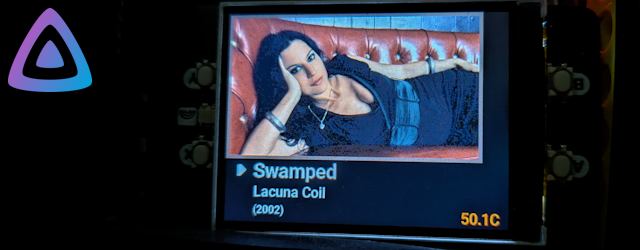
Like approximately every nerd in the world, I have a RaspberryPi sat in the corner of the room gathering dust. Some time ago, in an exciting burst of “I will finally do something with it”, I bought it a Display HAT Mini as a treat. That too, sat gathering dust.

More recently, I cancelled my music streaming subscription due to financial ethical constraints, and thanks to an old external hard drive and even older MP3 library, it was suddenly time for the Raspberry Pi’s “I’ve trained my whole life for this moment”. One JellyFin install later, I had a free and functional streaming service of my very own. But the Display HAT was jealous, and so was born… JellyHat.
Read More →

Baby’s First Fractal Generator

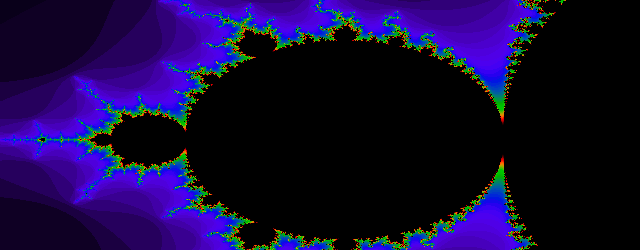
Waaaaaaay back in the day, I got a fractal visualiser free on the cover disk of a magazine. Little me had no idea what a fractal was beyond some vague concept of self-similarity. Certainly he had no idea of the maths behind them or how one went about doing it yourself. The little proto-nerd, with his basic knowledge of Basic, vowed that one day he would make his own generator.

Drumroll please, ladies and gentlemen, because nearly thirty years later, I present to you…

Read More →

Picsie v1.11

Just updated Picsie to support variable-delay animated GIFs rather than applying the delay on the first frame to the whole animation. Not the most common use case I’ll admit, but it was annoying me and everyone knows that dictates what gets fixed first.


Improving YouTube comments with BoopTube

BoopTube

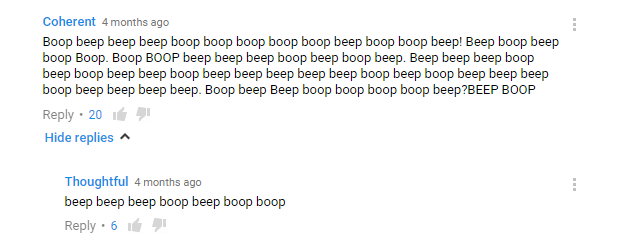
Everyone knows that YouTube comments are uniformly insightful and contemplative, but it always felt like they could still be improved. So in the name of learning something new I sat down and created a simple Chrome extension to try and give YouTube comments something of the respect and grandeur they deserve. And thus BoopTube was born.

The source is available in my GitHub repository if you’re so inclined.

Beep boop.


Picsie lives!

After all these years I still use Picsie as my go-to image browser – and now after four years of stability it has a new feature. Go see!

In other news, I’m using Git via BitBucket for source control now, and I’m contemplating open-sourcing the project.


Conway’s Game of Life

Conway Banner

I love Conway’s Game of Life and I’ve made a version in pretty much every language I’ve ever learned, including QBasic. So a Javascript implementation was pretty much inevitable…

This was my first time bringing in HTML elements outside the canvas to control the simulation, and I also integrated a third-party slider component from DHTMLX.


Fun with graph theory: Wilson’s Algorithm

Wilson Banner

The mini javascript projects continue apace. Today’s little program: an implementation of Wilson’s Algorithm.
Read More →


“Bubbles” canvas tutorial part 3: Getting touchy

HTML5 Bubbles 4

So far in this series we’ve set up a basic framework to get us started and then added a render loop and some actual bubbles.

This part will make the game interactive, adding mouse and touch input, and discussing some of the pitfalls that can crop up as you do so.
Read More →


“Bubbles” canvas tutorial part 4: Getting noisy

HTML5 Bubbles 5

Now we’ve got graphics, animation and interactivity, what’s left? In this final part of my HTML5 javascript/canvas tutorial we finish off our little game by adding some sound effects – what good is popping bubbles without the satisfying sounds of destruction? Unfortunately, adding audio is far trickier than it has any rights to be, so hopefully this tutorial will save at least one person the troubles I had to go through.
Read More →


“Bubbles” canvas tutorial part 2: Getting animated

HTML5 Bubbles 3

In the first part of this series we set the stage by putting together our framework and then getting a simple background on screen. This article will add our rendering loop to the code and let us actually get some bubbles out there.
Read More →